
Microcement can be applied over existing tiles, provided they are sound, firmly bonded and correctly prepared. A suitable overlay can transform a tiled surface into a continuous decorative finish without removing the existing covering.
The finished microcement is only as reliable as the surface beneath it. Loose tiles, uneven edges and untreated grout lines must be addressed before application.
Before and after: a tiled floor renovation
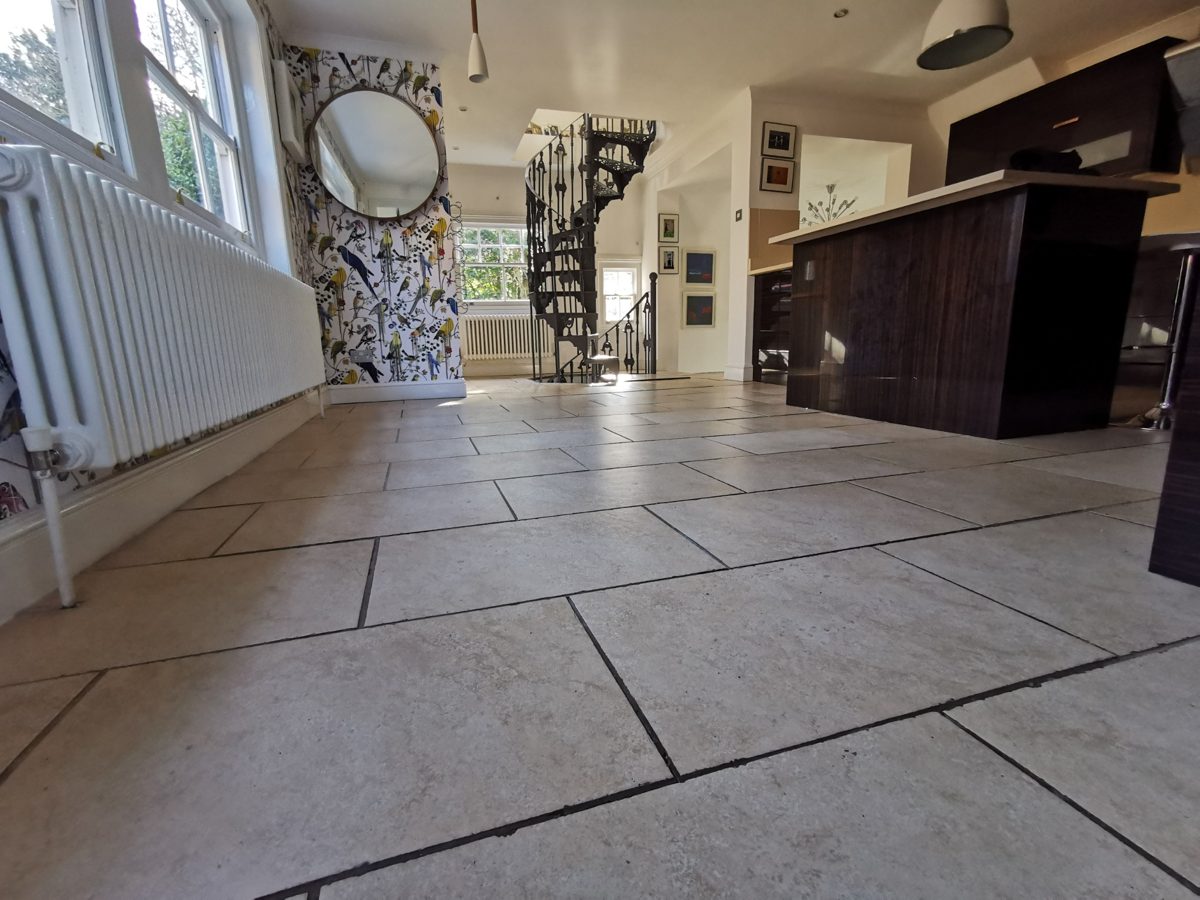
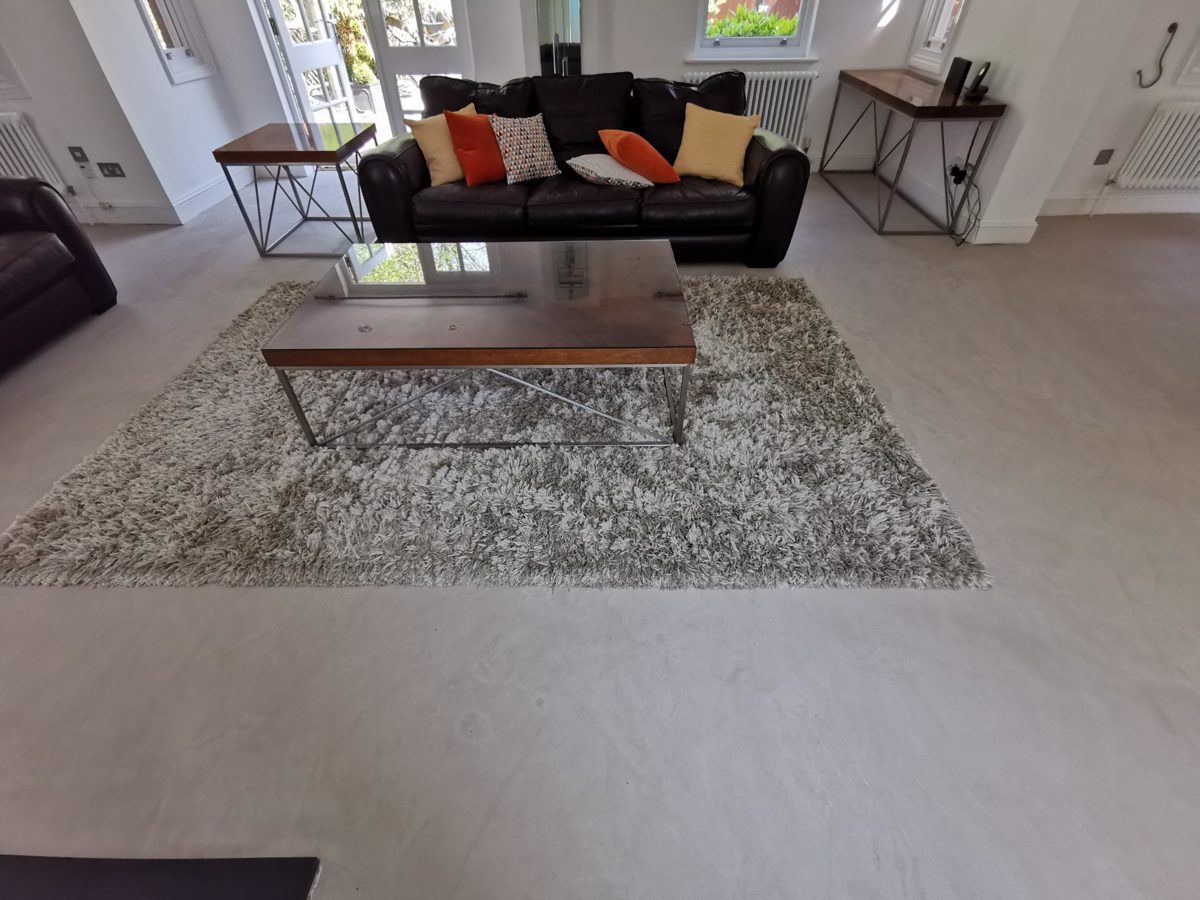
These photographs show different areas of the same renovation project: the original tiled kitchen floor and the living area after the microcement finish was completed.
Can your existing tiles be overlaid?
Before choosing microcement over tiles, the surface needs to be inspected. The tiles must be solid, stable and securely bonded to the underlying substrate.
Loose, rocking or hollow-sounding tiles need investigation and suitable repairs before work proceeds. Cracks also need assessment to establish whether there is movement beneath the tiled covering.
Microcement should not be used to cover up an unstable tiled surface. If substantial areas are loose or the substrate is moving, removing the tiles and repairing the base may be necessary.
Fill grout lines before grinding
If grout lines remain recessed or are inadequately treated, the original tile pattern may become visible through the finished microcement. This is often described as grout-line “ghosting” or “telegraphing”.
For the preparation approach described here, grout lines are best filled with a compatible material before grinding. Once the filler has cured sufficiently, the surface can be ground flat, bringing the filled joints and tile faces into a more even plane.
The filler must be suitable for the substrate and compatible with the chosen microcement system. Filling the joints reduces the risk of their showing through, but cannot compensate for loose tiles or ongoing movement.
Grind the tiles flat
The tiled surface needs to be mechanically ground to remove raised edges and create a flat, consistently prepared base. Simply coating the existing tile faces and grout recesses can leave unevenness that affects the final appearance.
Grinding also prepares the tile surface for the subsequent system layers. Use suitable equipment and effective dust extraction. After grinding, thoroughly remove dust and contamination, then check for defects before applying the specified primer.
Use a compatible microcement system
Once the tiles are sound, the grout lines have been filled and the surface has been ground flat, follow the preparation and application requirements of the selected system. This includes the appropriate primer, any specified reinforcement, the correct microcement grades and a compatible protective sealer.
Existing movement joints need assessment and appropriate detailing; they should not simply be filled and concealed. The required build-up depends on the substrate, intended use and whether the surface is in a dry or wet area. An overlay does not automatically make an existing tiled assembly waterproof.
Benefits of applying microcement over tiles
- Reduced disruption compared with removing a sound tiled covering.
- Retention of a suitable existing surface.
- A continuous decorative finish in place of the visible tile pattern.
- A choice of colours and textures to suit the room.
Limitations to consider
Overlaying tiles still requires substantial preparation. Filling, grinding, repairs and priming are essential parts of the work. Grout lines may show through if preparation is insufficient, and movement beneath the tiles can affect the new finish.
Allow for the additional system thickness around doors, thresholds and adjoining surfaces. A site inspection is needed to confirm whether an overlay is suitable.
Planning a microcement overlay?
Send ROQEN photographs of your tiled surface, its approximate area and details of any cracks, loose tiles or uneven sections. We can discuss preparation requirements and help you select materials for your project.
Explore our ready-to-use microcement, primers and sealers and microcement kits, or contact ROQEN for project advice.
Email: info@advancedresinsolutions.co.uk. Photographs support an initial discussion, but substrate condition and suitability must be confirmed on site before application.

