
Yes—microcement can be suitable for swimming pool surrounds when the complete system is specified for the location, with appropriate slip resistance and drainage.
Its continuous appearance makes it an attractive choice for poolside terraces, walkways and adjoining relaxation areas. However, a smooth decorative finish needs additional consideration wherever people will be walking with wet feet.
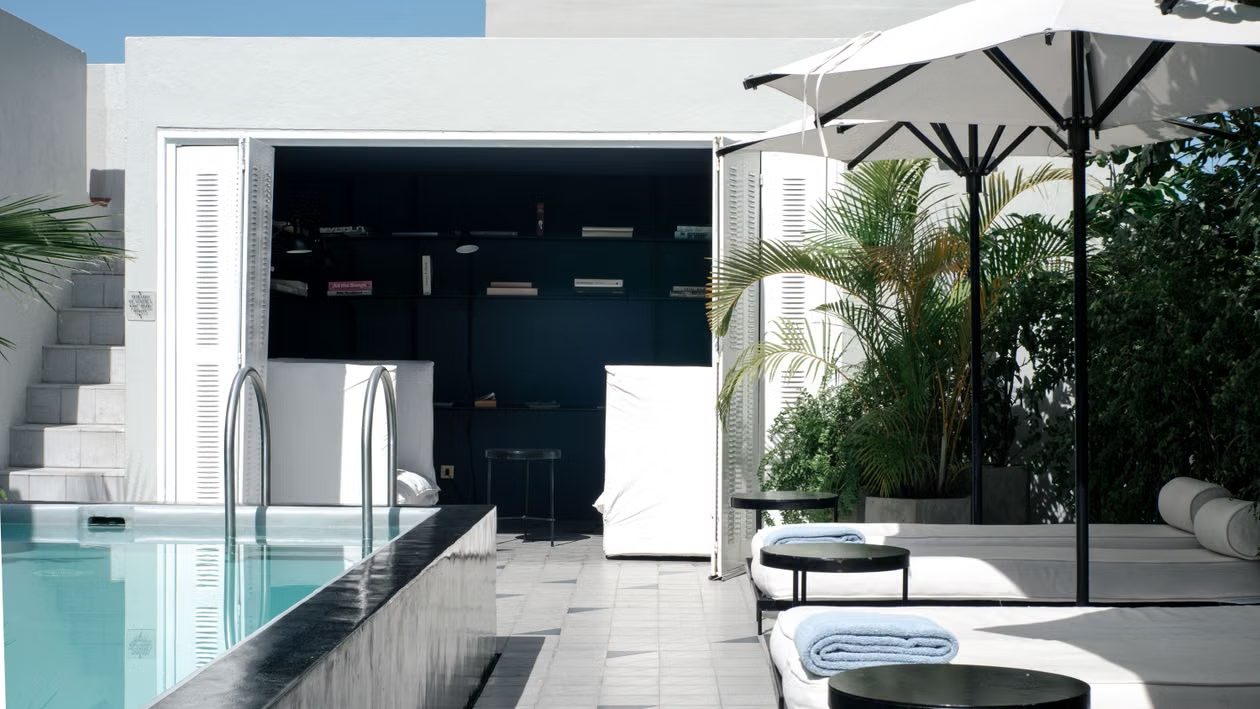
Improve grip with an anti-slip finish
Smooth microcement and sealers can become slippery when wet. Around a swimming pool, the finish should therefore include a suitable anti-slip treatment.
One option is to incorporate compatible anti-slip glass beads into the specified sealer, following the manufacturer’s instructions. These create a fine surface texture that can improve grip while retaining the decorative appearance of the microcement.
The bead size, application method, quantity and sealer compatibility all affect the result. The finish should also remain comfortable for barefoot use.
Adding glass beads does not automatically give the surface a particular slip rating. The complete finished system needs suitable evidence of wet-barefoot slip performance for its intended location.
Proper drainage is essential
Microcement is not a permeable surface. Water needs to drain across it towards suitable drainage points.
The underlying construction must have correctly designed falls to prevent puddles forming around the pool, particularly near steps, entrances and frequently used walkways.
An anti-slip treatment does not remove the need for drainage. Standing water can make surfaces harder to maintain and encourage deposits or biological growth that affect grip.
Plan the falls, drainage channels and outlet positions before applying the microcement. A thin decorative coating should not be expected to correct substantial drainage defects.
Choose a system suitable for poolside conditions
Pool surrounds are exposed to splashes, cleaning products and regular foot traffic. Outdoor installations also experience sunlight, rain and temperature changes.
The selected microcement, primer and sealer must be suitable for these conditions. Confirm compatibility with the pool’s water treatment and cleaning regime, particularly where chlorinated or salt-treated water regularly reaches the surface.
The substrate must be sound and stable, with movement joints and transitions correctly detailed. Follow the specified curing period before allowing water exposure or bringing the area into use.
This guidance concerns the area surrounding the pool. A coating suitable for poolside use is not automatically suitable for permanent immersion inside the swimming pool.
Would a permeable surface be better?
Where permeability is a priority, we recommend considering resin-bound stone.
Resin-bound stone has an open structure that allows water to pass through the surfacing layer. For the overall construction to drain through, it must also have a suitable permeable base and a properly designed route for the water.
Applying resin-bound stone over an impermeable base does not make the whole build-up permeable.
Resin-bound stone offers a different appearance from microcement, with visible natural aggregate and a textured finish. Around pools, the aggregate blend and finished system should be selected for barefoot comfort, wet slip performance and the expected exposure.
Visit Advanced Resin Supplies for resin-bound materials and advice on suitable surfacing options.
Microcement or resin-bound stone?
Microcement suits projects seeking a continuous decorative appearance, provided the specification includes suitable wet slip performance and positive surface drainage.
Resin-bound stone is an option where a natural aggregate appearance and a permeable construction are priorities.
The right choice depends on the existing base, drainage design, exposure and how the poolside area will be used.
Planning your swimming pool surround?
Send us photographs, the approximate area and details of the existing surface. Let us know whether the pool is indoors or outdoors and whether you need a permeable finish.
For microcement enquiries: info@advancedresinsolutions.co.uk or contact ROQEN.
For resin-bound materials: Advanced Resin Supplies.
For related guidance, read microcement in bathrooms and showers and our ready-to-use versus 2K epoxy comparison.

